
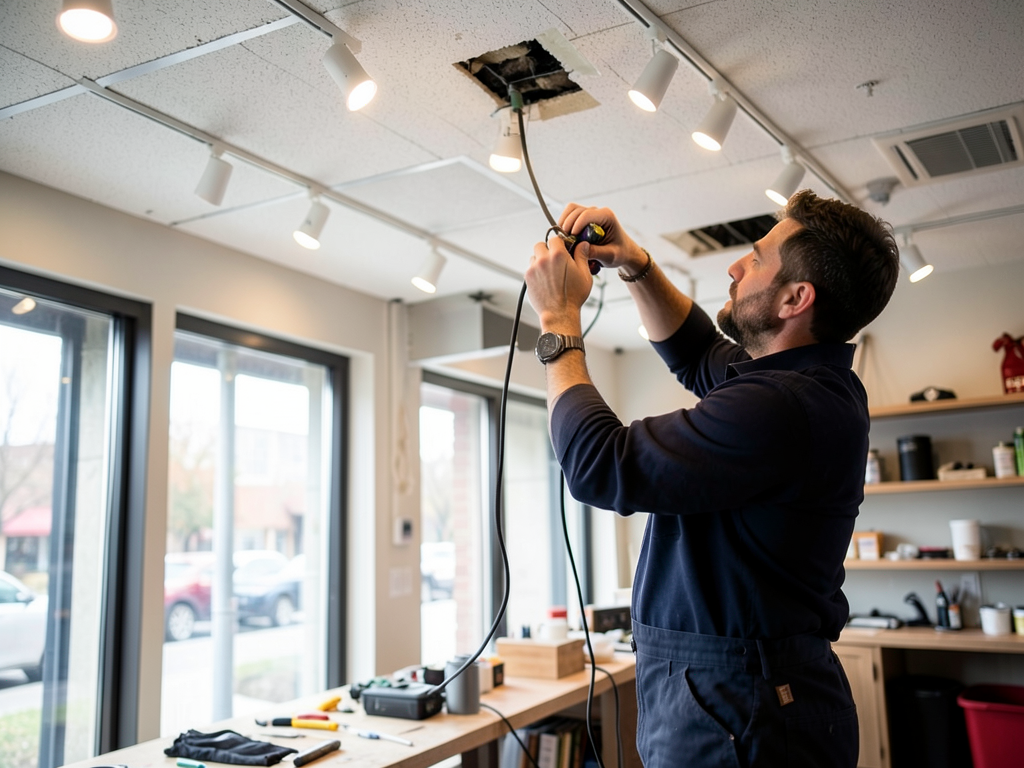
Why your Montrose boutique needs a dedicated lighting plan to attract customers
Your Montrose boutique sits in one of Houston’s most vibrant retail corridors where foot traffic depends on visual appeal. The right lighting transforms how customers perceive your space and products. A dedicated lighting plan does more than illuminate your merchandise. It creates atmosphere, guides customer movement, and directly impacts your bottom line. Houston building permits.
Many boutique owners in Houston’s Upper Kirby and Montrose areas overlook how lighting affects sales conversion. Studies show customers spend 20% more time in well-lit retail spaces and are 30% more likely to make a purchase when products are displayed under proper lighting conditions. Electrical Houston.
Before diving into specific solutions, understand that retail lighting differs from residential or office lighting. Your boutique needs layers of light working together to create both functionality and mood.. Read more about Modernizing warehouse lighting for better safety near the Houston Ship Channel.
Understanding retail lighting fundamentals for Houston boutiques
Retail lighting requires balancing several factors unique to boutique environments. The Houston climate adds another layer of complexity. High humidity and heat affect lighting equipment longevity and energy consumption.. Read more about The Best Lighting Setup for a Productive and Professional Home Office in Westchase.
Color temperature measured in Kelvin affects how customers perceive your merchandise. Warm lighting around 2700K creates cozy, inviting spaces for clothing boutiques. Cooler temperatures around 4000K work better for jewelry or tech stores where accurate color representation matters.
The Color Rendering Index (CRI) measures how accurately a light source displays colors compared to natural sunlight. For retail, you need a CRI of 85 or higher. Lower CRI causes colors to appear dull or distorted, which hurts product presentation.
Foot-candle measurements indicate light intensity. Retail spaces typically need 50-100 foot-candles for general areas and up to 300 foot-candles for display cases or focal points.
Four essential lighting layers for boutique success
Successful retail lighting uses four distinct layers working together. Each serves a specific purpose in creating an inviting shopping experience.
Ambient lighting provides overall illumination for your space. This forms the foundation of your lighting plan. For boutiques in older Montrose buildings, ambient lighting often needs upgrading from outdated fluorescent fixtures to modern LED solutions. LED lighting efficiency.
Task lighting focuses on specific functional areas like checkout counters, fitting rooms, and work stations. These areas need brighter, more directed light to ensure staff can perform their duties efficiently and customers can examine products closely.
Accent lighting highlights specific products, displays, or architectural features. This creates visual interest and draws customers’ eyes to featured merchandise. Track lighting systems work exceptionally well for accent lighting because they allow you to adjust focus as displays change.
Decorative lighting adds personality and reinforces your brand identity. Statement chandeliers, pendant lights, or wall sconces contribute to the overall aesthetic while providing functional illumination.
LED retrofitting benefits for Houston retail spaces
LED technology has revolutionized retail lighting with benefits that directly impact your business operations. The initial investment pays for itself through multiple channels.
Energy consumption drops by 60-80% when upgrading from traditional lighting to LED. For a typical Montrose boutique operating 12 hours daily, this translates to hundreds of dollars in monthly savings during Houston’s long cooling season.
LED fixtures generate significantly less heat than traditional bulbs. This reduces your cooling load, creating a more comfortable shopping environment while lowering air conditioning costs. In Houston’s climate, this heat reduction becomes a major operational advantage.
Lumens per watt efficiency continues improving. Modern LED fixtures produce 100-150 lumens per watt compared to 15-25 for incandescent bulbs. This means brighter spaces using less electricity.
Lifespan extends dramatically. Quality LED fixtures last 50,000 hours or more, reducing maintenance costs and the hassle of frequent bulb replacements in hard-to-reach display areas.
Houston building code compliance for retail lighting
Retail lighting in Houston must comply with specific electrical codes and energy efficiency standards. Understanding these requirements prevents costly mistakes and ensures smooth inspections.
The City of Houston follows the International Energy Conservation Code (IECC) with local amendments. These codes mandate specific lighting power density limits for commercial spaces. Exceeding these limits requires additional controls or documentation. Three-Phase Power Services.
Occupancy sensors become mandatory in certain areas like storage rooms, restrooms, and back offices. These sensors automatically turn off lights when spaces are unoccupied, reducing energy waste.
Emergency lighting requirements ensure customer safety during power outages. Exit signs, emergency pathway lighting, and backup power systems must meet specific illumination levels and placement requirements.
Permit requirements vary based on the scope of work. Simple fixture replacements often don’t require permits, but new circuits, panel upgrades, or significant electrical modifications do. Always check with the Houston Permitting Center before starting major lighting projects.
Smart lighting controls for retail energy management
Modern lighting controls offer boutique owners unprecedented control over their lighting environment while maximizing energy savings. These systems pay for themselves through reduced utility bills and improved operational efficiency.
Daylight harvesting systems automatically adjust artificial lighting based on natural light levels. Sensors detect sunlight through windows and dim or brighten fixtures accordingly. This technology works particularly well for boutiques with large storefront windows.
Scheduling controls allow you to program lighting scenes for different times of day or seasons. Morning settings might provide bright, energizing light while evening settings create warmer, more intimate atmospheres.
Dimming capabilities extend beyond simple brightness control. Modern LED dimming systems maintain color temperature consistency while adjusting light levels, preventing the cool-to-warm shift that plagued older dimming technologies.
Remote access via smartphone apps enables you to control lighting from anywhere. This proves invaluable for after-hours security checks or adjusting displays for special events.
Window display lighting strategies
Your storefront windows serve as your primary marketing tool, especially in high-traffic areas like Westheimer Road. Strategic window lighting attracts passersby and showcases your merchandise even after hours.
Nighttime illumination requires careful planning. Too much brightness creates glare and wastes energy. Too little fails to attract attention. The sweet spot provides enough light to highlight key products without overwhelming the viewer.
Directional lighting allows you to spotlight specific items or create dramatic shadows that add depth to your displays. Adjustable track heads give you flexibility to change focus as seasons and merchandise change.
Color temperature consistency matters for window displays. Mixing warm and cool lights creates an unprofessional appearance that detracts from your merchandise. Protect Your Tech With Professional Whole House Surge Protection in Cypress.
Energy-efficient LED strip lighting works well for backlighting shelves or creating glowing effects around display perimeters. These low-profile fixtures remain hidden while providing even illumination.
Climate considerations for Houston retail lighting
Houston’s unique climate creates specific challenges for retail lighting systems. High humidity, extreme heat, and occasional severe weather require specialized solutions.
Moisture resistance becomes critical in Houston’s humid environment. Lighting fixtures near entrances or in areas with temperature fluctuations need appropriate IP ratings to prevent condensation damage.
Heat dissipation affects fixture selection. Even energy-efficient LEDs generate heat that must be managed properly. Enclosed fixtures in Houston’s climate may experience reduced lifespans without adequate ventilation.
Lightning protection matters for outdoor lighting and rooftop equipment. Houston’s frequent thunderstorms can damage electrical systems, making proper grounding and surge protection essential. How to Plan Your Outdoor Landscape Lighting in The Woodlands Without Overspending.
Air conditioning integration affects lighting placement. Fixtures near vents or returns may experience airflow issues that impact performance or create maintenance challenges.
Maintenance strategies for high-traffic retail environments
Retail lighting requires consistent maintenance to preserve the carefully crafted atmosphere that drives sales. A proactive maintenance schedule prevents the gradual degradation that many boutique owners overlook.
Monthly visual inspections catch issues before they become problems. Check for flickering lights, discolored lenses, or dust accumulation that reduces light output. These quick checks take minutes but prevent larger issues.
Quarterly cleaning of fixtures maintains optimal light output. Dust and grime accumulation can reduce light output by 30% over time. Clean lenses and reflectors restore brightness without replacing fixtures.
Annual professional inspections identify potential problems early. Electricians can check connections, test emergency systems, and verify that all fixtures operate at peak efficiency.
Inventory management of replacement parts prevents extended downtime when failures occur. Keep common lamp types, ballasts, and drivers on hand for quick repairs.
ROI calculation for boutique lighting investments
Understanding the return on investment helps justify lighting upgrades. The benefits extend beyond simple energy savings to include increased sales and improved customer experience.
Energy savings calculations start with your current usage. A typical 1,500-square-foot boutique using outdated lighting might consume 15,000 kWh annually for lighting. LED conversion could reduce this to 4,000 kWh, saving $1,500-$2,000 annually at current Houston electricity rates.
Maintenance cost reduction adds to savings. LED fixtures might last 10 years versus 2-3 years for traditional lighting. This eliminates replacement costs and reduces labor expenses for bulb changes.
Sales impact proves harder to quantify but often provides the largest return. Improved lighting can increase sales by 15-25% through better product presentation and enhanced shopping experience.
Property value appreciation occurs when lighting upgrades improve the overall quality of your space. This matters if you lease or plan to sell your business.
Common lighting mistakes boutique owners make
Understanding common pitfalls helps you avoid costly errors when planning your boutique lighting. Many mistakes seem minor but significantly impact your store’s success.
Overlighting creates harsh, unwelcoming environments. Many boutique owners believe brighter equals better, but excessive light levels cause eye strain and make customers uncomfortable. Aim for 50-75 foot-candles in general retail areas.
Inconsistent color temperature throughout the space creates visual chaos. Stick to a single color temperature or use warm and cool lights purposefully to define different areas.
Ignoring ceiling height leads to poor light distribution. High ceilings require more powerful fixtures or additional units to achieve adequate illumination at floor level.
Neglecting dimming capabilities limits your flexibility. Being unable to adjust light levels for different times of day or seasons reduces your ability to create the right atmosphere.
Skipping professional design consultation often results in inefficient, ineffective lighting. While DIY approaches seem cost-effective initially, professional design typically saves money through optimal fixture selection and placement.
Choosing the right lighting partner for your boutique
Selecting a qualified lighting professional makes the difference between a successful project and ongoing problems. Look for specific qualifications and experience when evaluating potential partners.
Commercial electrical experience matters more than residential expertise. Boutique lighting requires understanding of retail-specific challenges like display lighting, fitting room illumination, and cash wrap task lighting.
Houston-specific knowledge proves invaluable. Local electricians understand city codes, permit requirements, and climate considerations that affect lighting system performance and longevity.
Design capabilities separate true lighting professionals from basic electricians. Look for partners who can create lighting plans, not just install fixtures. They should understand retail psychology and how lighting affects customer behavior.
Warranty and maintenance support indicate long-term commitment. Quality partners stand behind their work and offer ongoing support for the systems they install.
Portfolio review reveals actual capabilities. Ask to see examples of similar boutique projects, particularly in Houston’s Montrose or Upper Kirby areas where architectural styles and building codes may differ from other regions.
Implementation timeline for boutique lighting projects
Planning your lighting upgrade requires understanding the timeline involved. Rushing projects often leads to mistakes and extended business disruptions.
Initial consultation and design typically requires 1-2 weeks. During this phase, your lighting partner assesses your space, discusses goals, and creates preliminary plans.
Permit acquisition adds 2-4 weeks to the timeline. Houston permitting processes vary based on project scope and current workload at the permitting center.
Fixture selection and procurement takes 2-6 weeks depending on availability. Custom fixtures or specialized equipment may require longer lead times.
Installation itself usually requires 3-7 days for a typical boutique, though this varies based on project complexity and whether you need to remain open during work.
Post-installation adjustments and fine-tuning should occur over 1-2 weeks as you and your staff become familiar with the new system’s capabilities.
Future trends in retail lighting technology
Staying informed about emerging technologies helps you make forward-thinking decisions for your boutique lighting. Some trends offer immediate benefits while others represent longer-term investments.
Human-centric lighting mimics natural light patterns to support circadian rhythms. This technology can create more comfortable shopping environments while potentially improving staff productivity.
Li-Fi technology uses light waves for data transmission, offering potential for in-store connectivity and customer engagement applications. While still emerging, this technology could transform how boutiques interact with customers.
Dynamic color-changing systems allow instant atmosphere adjustments. Modern LED technology enables precise color control, letting you change your store’s mood with a button press.
Integrated sensors and analytics provide data on customer movement patterns and dwell times. This information helps optimize product placement and store layout beyond just lighting considerations. The Top Rated Licensed Electricians Serving the River Oaks Area.
Solar integration becomes more viable as panel efficiency improves. For boutiques with good sun exposure, solar-powered lighting could reduce operating costs while supporting sustainability initiatives.
Frequently Asked Questions
How much does boutique lighting design and installation cost in Houston?
Costs vary significantly based on boutique size, existing conditions, and design complexity. A basic LED retrofit for a 1,500-square-foot space typically ranges from $3,000 to $8,000. Complete design and installation for a new boutique can cost $10,000 to $30,000 or more. The best approach is to request a site assessment for accurate pricing specific to your space.
Do I need permits for lighting upgrades in my Montrose boutique?
Permit requirements depend on the scope of work. Simple fixture replacements usually don’t require permits. However, new circuits, panel upgrades, or significant electrical modifications do require permits from the City of Houston. Your lighting professional should handle permit acquisition as part of the project.
How long does a typical boutique lighting project take from start to finish?
Most boutique lighting projects require 6-12 weeks total from initial consultation to final installation. This includes 1-2 weeks for design, 2-4 weeks for permits, 2-6 weeks for fixture procurement, and 3-7 days for installation. Factors like custom fixture orders or complex permit requirements can extend this timeline.
Can I keep my boutique open during lighting installation?
Yes, most lighting installations can be completed while keeping your business operational. Work typically proceeds in phases, with electricians isolating sections of your space at a time. However, brief power interruptions may be necessary. Discuss your operational requirements with your lighting partner to develop a plan that minimizes disruption.
What lighting color temperature works best for clothing boutiques?
Most clothing boutiques benefit from warm to neutral color temperatures between 2700K and 3500K. This range creates inviting atmospheres while accurately representing fabric colors. Cooler temperatures around 4000K work better for jewelry or tech-focused boutiques where precise color rendering matters more than ambiance.
How can I make my boutique lighting more energy efficient?
LED conversion provides the most significant energy savings, reducing consumption by 60-80%. Additional efficiency measures include occupancy sensors for back rooms, daylight harvesting systems for areas with windows, dimming controls to adjust light levels based on needs, and regular maintenance to ensure fixtures operate at peak efficiency.
You may also find this helpful. Fixing the annoying buzz in your Hedwig Village LED light fixtures.
{
“@context”: “https://schema.org”,
“@type”: “BlogPosting”,
“headline”: “Why your Montrose boutique needs a dedicated lighting plan to attract customers”,
“description”: “Discover how strategic retail lighting design drives sales and foot traffic for Montrose boutiques. Learn Houston-specific codes, ROI, and energy-efficient solutions.”,
“wordCount”: 2484,
“datePublished”: “2026-06-02T15:05:00.000Z”,
“dateModified”: “2026-06-02T15:05:00.000Z”,
“inLanguage”: “en-US”,
“mainEntityOfPage”: {
“@type”: “WebPage”,
“@id”: “https://titanelectricianshouston.com”
},
“publisher”: {
“@type”: “LocalBusiness”,
“name”: “Titan Electricians Houston”,
“url”: “https://titanelectricianshouston.com”
},
“author”: {
“@type”: “Organization”,
“name”: “Titan Electricians Houston”,
“url”: “https://titanelectricianshouston.com”
},
“image”: {
“@type”: “ImageObject”,
“url”: “https://titanelectricianshouston.com/wp-content/uploads/2026/03/why-your-montrose-boutique-needs-a-dedicated-light-1.png”
}
}
{
“@context”: “https://schema.org”,
“@type”: “Electrician”,
“name”: “Titan Electricians Houston”,
“url”: “https://titanelectricianshouston.com”,
“address”: {
“@type”: “PostalAddress”,
“addressLocality”: “Houston”
},
“areaServed”: {
“@type”: “City”,
“name”: “Houston”
}
}
{
“@context”: “https://schema.org”,
“@type”: “FAQPage”,
“mainEntity”: [
{
“@type”: “Question”,
“name”: “How much does boutique lighting design and installation cost in Houston?”,
“acceptedAnswer”: {
“@type”: “Answer”,
“text”: “Costs vary significantly based on boutique size, existing conditions, and design complexity. A basic LED retrofit for a 1,500-square-foot space typically ranges from $3,000 to $8,000. Complete design and installation for a new boutique can cost $10,000 to $30,000 or more. The best approach is to request a site assessment for accurate pricing specific to your space.”
}
},
{
“@type”: “Question”,
“name”: “Do I need permits for lighting upgrades in my Montrose boutique?”,
“acceptedAnswer”: {
“@type”: “Answer”,
“text”: “Permit requirements depend on the scope of work. Simple fixture replacements usually don’t require permits. However, new circuits, panel upgrades, or significant electrical modifications do require permits from the City of Houston. Your lighting professional should handle permit acquisition as part of the project.”
}
},
{
“@type”: “Question”,
“name”: “How long does a typical boutique lighting project take from start to finish?”,
“acceptedAnswer”: {
“@type”: “Answer”,
“text”: “Most boutique lighting projects require 6-12 weeks total from initial consultation to final installation. This includes 1-2 weeks for design, 2-4 weeks for permits, 2-6 weeks for fixture procurement, and 3-7 days for installation. Factors like custom fixture orders or complex permit requirements can extend this timeline.”
}
},
{
“@type”: “Question”,
“name”: “Can I keep my boutique open during lighting installation?”,
“acceptedAnswer”: {
“@type”: “Answer”,
“text”: “Yes, most lighting installations can be completed while keeping your business operational. Work typically proceeds in phases, with electricians isolating sections of your space at a time. However, brief power interruptions may be necessary. Discuss your operational requirements with your lighting partner to develop a plan that minimizes disruption.”
}
},
{
“@type”: “Question”,
“name”: “What lighting color temperature works best for clothing boutiques?”,
“acceptedAnswer”: {
“@type”: “Answer”,
“text”: “Most clothing boutiques benefit from warm to neutral color temperatures between 2700K and 3500K. This range creates inviting atmospheres while accurately representing fabric colors. Cooler temperatures around 4000K work better for jewelry or tech-focused boutiques where precise color rendering matters more than ambiance.”
}
},
{
“@type”: “Question”,
“name”: “How can I make my boutique lighting more energy efficient?”,
“acceptedAnswer”: {
“@type”: “Answer”,
“text”: “LED conversion provides the most significant energy savings, reducing consumption by 60-80%. Additional efficiency measures include occupancy sensors for back rooms, daylight harvesting systems for areas with windows, dimming controls to adjust light levels based on needs, and regular maintenance to ensure fixtures operate at peak efficiency.”
}
}
]
}
{
“@context”: “https://schema.org”,
“@type”: “BreadcrumbList”,
“itemListElement”: [
{
“@type”: “ListItem”,
“position”: 1,
“name”: “Home”,
“item”: “https://titanelectricianshouston.com”
},
{
“@type”: “ListItem”,
“position”: 2,
“name”: “Blog”,
“item”: “https://titanelectricianshouston.com/blog”
},
{
“@type”: “ListItem”,
“position”: 3,
“name”: “Why your Montrose boutique needs a dedicated lighting plan to attract customers”
}
]
}
{
“@context”: “https://schema.org”,
“@type”: “Service”,
“serviceType”: “Electricians”,
“provider”: {
“@type”: “LocalBusiness”,
“name”: “Titan Electricians Houston”,
“url”: “https://titanelectricianshouston.com”
},
“areaServed”: {
“@type”: “City”,
“name”: “Houston”
},
“description”: “Discover how strategic retail lighting design drives sales and foot traffic for Montrose boutiques. Learn Houston-specific codes, ROI, and energy-efficient solutions.”
}