







Menu

GFCI & AFCI Outlet Installation in Houston – Code-Compliant Protection for Every Circuit

Titan Electricians Houston installs GFCI and AFCI receptacles that meet NEC requirements and protect your property from ground faults, arc faults, and electrical fires across residential and commercial applications.

Slider Image 1
Slider Image 2
Slider Image 3
Slider Image 4
Slider Image 5
Slider Image 7
Slider Image 8
Slider Image 9
Slider Image 10
Slider Image 11

Why Houston Homes and Businesses Need Advanced Circuit Protection

Houston's high humidity and frequent summer storms create conditions where ground faults and arc faults become serious electrical hazards. When moisture infiltrates outlet boxes or wiring insulation breaks down from heat cycling, the risk of shock and fire increases dramatically. The National Electrical Code now mandates GFCI protection in wet locations and AFCI protection in living spaces, but many older Houston properties still operate with standard receptacles that offer zero protection.

You see the problem in bathrooms where outlets sit inches from shower spray, in kitchens where water and electricity meet daily, and in bedrooms where damaged lamp cords can arc inside walls. A ground fault occurs when electricity finds an unintended path to ground, often through a person. An arc fault happens when damaged wiring creates sparking that ignites surrounding materials. Both scenarios turn deadly fast.

Installing ground fault and arc fault outlets addresses these risks at the point of use. GFCI receptacles detect current imbalances as small as 4-6 milliamps and trip in milliseconds. AFCI receptacles identify the unique electrical signatures of dangerous arcing and shut down the circuit before ignition. Dual function AFCI GFCI outlet installation provides both protections in a single device, making compliance simpler in locations that require both.

Houston's clay soil causes foundation movement that stresses electrical boxes and loosens connections over time. This movement creates the exact conditions where arc faults develop. GFI and AFCI outlet replacement becomes necessary not just for code compliance, but because your existing infrastructure has shifted enough to create hazard points. Wiring GFCI and AFCI receptacles correctly requires understanding load calculations, multi-wire branch circuits, and proper grounding paths. Get it wrong and the device either nuisance-trips constantly or fails to protect when needed.

Why Houston Homes and Businesses Need Advanced Circuit Protection
How We Install Protection That Actually Works

How We Install Protection That Actually Works

GFCI and AFCI receptacle installation starts with circuit analysis, not just swapping devices. We map the circuit to identify whether you need line-load wiring to protect downstream outlets or if each location requires individual protection. This matters because one GFCI installed at the line side can protect multiple standard outlets on the same circuit, but only if the circuit topology supports it. Houston homes built before 1990 often have shared neutral configurations that complicate AFCI installation, requiring circuit reconfiguration before the new receptacle goes in.

We verify grounding integrity before installing any protective device. A GFCI requires a solid equipment ground to function correctly, even though it can operate on an ungrounded circuit with proper labeling. An AFCI absolutely requires both hot, neutral, and ground to analyze waveform patterns. If your panel still uses aluminum wiring or has backstabbed connections, we address those deficiencies first. Installing a protective receptacle on compromised wiring just moves the failure point without adding real safety.

The installation process includes torque-specification terminal connections, plumb mounting in the box, and verification testing with both the test button and a plug-in GFCI tester. We confirm trip time falls within the 25-millisecond NEC requirement and that reset functionality works smoothly. For AFCI devices, we induce test arcs to verify detection algorithms work across series arcs, parallel arcs, and ground arcs. Dual function devices get tested for both modes independently.

We document the installation with circuit labels at the panel and on the receptacle itself, noting protection type and circuit number. This documentation matters when you sell the property or when another electrician works on the system years later. Houston's permit system requires proper documentation for inspection, and we handle that entire process when the scope requires it.

What Happens During Your Outlet Protection Upgrade

GFCI & AFCI Outlet Installation in Houston – Code-Compliant Protection for Every Circuit
01

Circuit Evaluation

We start by testing the existing circuit with a multimeter and circuit analyzer to verify voltage, grounding, and polarity. This reveals whether the circuit can support GFCI or AFCI protection without modification. We trace the circuit path to identify all outlets on the same branch and determine optimal protection placement. If the circuit has shared neutrals or other code violations, we map those issues and provide solutions before installation begins.
02

Device Installation

After confirming circuit integrity, we install the GFCI, AFCI, or dual function receptacle using proper wire termination techniques and torque specifications. Line and load connections go to the correct terminals, and we ensure neutral and ground conductors follow NEC requirements. The device mounts flush in the box with the face plate aligned vertically. We never force devices into undersized boxes or leave wire connections loose under terminal screws.
03

Testing and Documentation

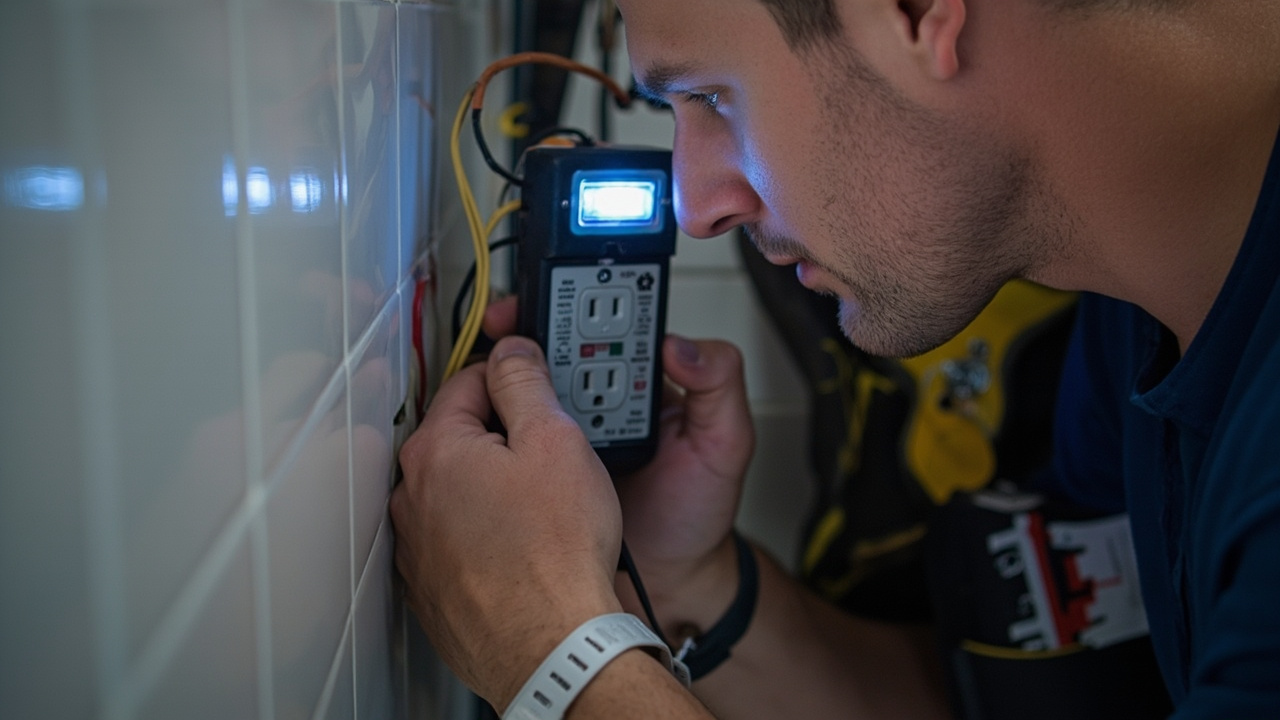
We test the installed device using both the built-in test button and an external GFCI tester to verify proper trip function and response time. For AFCI devices, we use specialized testers that generate arc signatures to confirm detection works correctly. You receive documentation showing the circuit number, protection type, and installation date. We label the panel and provide guidance on monthly testing using the test button to maintain protection reliability.

Why Houston Properties Trust Titan Electricians for Code-Compliant Protection

Houston operates under the 2020 NEC with local amendments that affect GFCI and AFCI requirements differently than surrounding counties. We stay current with these code revisions and understand how Houston's inspection department interprets protection requirements for remodels, additions, and panel upgrades. When you replace a standard outlet with GFCI protection in a kitchen, the inspector wants to see it done correctly the first time, not called back for corrections.

Our technicians handle the permit process when your project requires it. GFI and AFCI outlet replacement in existing locations typically does not trigger permit requirements, but adding new circuits or upgrading an entire panel does. We know which projects need inspection and which fall under maintenance exemptions. This knowledge saves you time and keeps you compliant with Houston's electrical codes.

We work across residential and commercial applications, from single-outlet replacements in Heights bungalows to full building protection upgrades in Midtown office spaces. Commercial installations often require additional considerations like tamper-resistant receptacles in patient care areas or weather-resistant devices in outdoor locations. Wiring GFCI and AFCI receptacles in commercial settings means coordinating with other trades and working around business operations to minimize disruption.

The electrical supply houses we use stock commercial-grade devices rated for extended lifecycles, not the light-duty residential products sold at big-box stores. This matters because cheap GFCI devices fail at higher rates and create nuisance tripping that frustrates occupants. We install devices that maintain calibration over time and stand up to Houston's heat cycling and humidity exposure.

You get straightforward communication about what your property needs, why it needs it, and how the installation prevents specific hazards. We do not upsell unnecessary upgrades, but we do identify electrical deficiencies that create real risk and explain them in terms you can understand and act on.

What to Expect From Start to Finish

Response Time

We schedule GFCI and AFCI outlet installations within 24 to 48 hours for most residential requests. Commercial projects require coordination with your operations schedule, which we accommodate through after-hours or weekend availability. Emergency calls for tripping GFCI devices or suspected arc faults get same-day response because these symptoms indicate active hazards. Simple outlet replacements take 30 to 60 minutes per location. Whole-house protection upgrades require several hours depending on circuit count and panel access.

Initial Assessment

Our technician arrives with testing equipment to analyze your existing electrical system before recommending specific solutions. We test outlets you want upgraded, check the panel for available capacity, and verify grounding integrity. You receive an explanation of what we find, why it matters, and what installation approach works best for your situation. We identify any circuit issues that need correction before GFCI or AFCI protection can function properly. This assessment takes 15 to 30 minutes and prevents surprises during installation.

Installation Quality

You get GFCI and AFCI receptacles installed to NEC specifications with proper torque on all terminals and secure mounting in code-compliant boxes. We verify the device tests correctly before we leave, and you see the test performed so you understand how to maintain the protection monthly. Wire connections use the screw terminals, never backstabs, and we ensure adequate wire length remains in the box for future service. The face plate mounts flush and level, and we clean up completely, leaving no wire scraps or debris behind.

Ongoing Support

GFCI and AFCI devices require monthly testing using the built-in test button to verify protection remains functional. We provide simple instructions for this test and explain what to do if the device stops resetting. The devices themselves carry manufacturer specifications for lifespan, typically 10 to 15 years, though Houston's humidity can shorten that timeline. We maintain service records showing installation dates and device types, making future upgrades or troubleshooting more efficient. If a device develops problems, we return to diagnose whether the fault lies with the receptacle, the circuit, or connected equipment.

Frequently Asked Questions

You Have Questions,
We Have Answers

Can an outlet be both AFCI and GFCI? +

Yes. Dual-function GFCI/AFCI outlets exist and provide both ground-fault protection (to prevent shocks in wet areas) and arc-fault protection (to prevent electrical fires from damaged wiring). These outlets are common in Houston kitchens, bathrooms, and laundry rooms where moisture and electrical loads intersect. They meet current National Electrical Code (NEC) requirements without needing separate devices. You can identify them by testing buttons labeled for both functions. They cost more than standard outlets but eliminate the need for two separate protection devices in spaces requiring both safeguards.

Where are GFCI and AFCI breakers required? +

The NEC requires GFCI protection in areas exposed to moisture: kitchens, bathrooms, garages, outdoor outlets, crawl spaces, and unfinished basements. AFCI breakers protect living areas where fires can start from damaged cords or wiring, including bedrooms, living rooms, hallways, closets, and dining rooms. Houston homes built after 2002 typically have AFCI protection in bedrooms, while newer construction extends this to most 120-volt circuits. Local inspectors enforce these codes strictly. Older Houston homes in neighborhoods like the Heights or Montrose often lack this protection and need upgrades during renovations.

What is the AFCI 6 foot rule? +

The AFCI 6-foot rule allows a short segment of non-AFCI-protected wiring between the panel and the first protection point. If you install an AFCI breaker at the panel, all wiring downstream gets protection immediately. If you use an AFCI outlet instead, the first 6 feet of cable from the panel to that outlet can remain unprotected. This flexibility helps during renovations in older Houston homes where rewiring from the panel is impractical. Most electricians prefer AFCI breakers at the panel for simpler, more comprehensive protection across the entire circuit.

Should a GFCI outlet be first or last? +

Install a GFCI outlet first on the circuit, closest to the power source. This positioning allows the GFCI to protect all downstream outlets on the same circuit through its load terminals. In Houston kitchens and bathrooms, one GFCI outlet near the panel can protect several standard outlets that follow. This saves money compared to installing GFCI outlets at every location. The GFCI trips if it detects a ground fault anywhere downstream, cutting power to all protected outlets. Always test monthly using the test button to confirm proper function.

Where should you not use AFCI breakers? +

Avoid AFCI breakers on circuits powering equipment that generates normal arcing during operation, like certain motor-driven appliances, treadmills, or older vacuum cleaners. These devices can cause nuisance tripping. Dedicated circuits for refrigerators, freezers, and sump pumps typically skip AFCI protection to prevent food spoilage or flooding from false trips. Houston code allows exemptions for specific appliance circuits. Fire alarm and security system circuits also exclude AFCI protection because unwanted shutoffs compromise safety. Your electrician should identify which circuits genuinely need AFCI protection versus where it creates problems.

What happens if you put a 15 amp GFCI on a 20 amp circuit? +

Putting a 15-amp GFCI outlet on a 20-amp circuit violates code and creates a bottleneck. The outlet becomes the weak link, limiting current flow to 15 amps even though the circuit breaker allows 20 amps. This risks overheating the outlet under heavy loads, particularly in Houston kitchens where countertop appliances draw significant power. Always match outlet amperage to circuit amperage. Use 20-amp rated GFCI outlets (identifiable by a horizontal slot on one receptacle) on 20-amp circuits. Mismatched components fail inspection and create fire hazards. Replace with properly rated devices immediately.

Does a fridge need to be AFCI and GFCI protected? +

Current NEC code does not require GFCI or AFCI protection for refrigerator circuits in most cases. Refrigerators on dedicated 20-amp circuits typically skip both protections to avoid nuisance tripping that spoils food. However, if your fridge plugs into a kitchen countertop outlet (within 6 feet of a sink), that outlet needs GFCI protection. AFCI requirements vary by jurisdiction. Houston permits inspectors may allow exceptions for appliance circuits. Many electricians install a standard outlet on a dedicated circuit in the garage or kitchen specifically for refrigerators to sidestep unnecessary tripping issues.

What is the disadvantage of AFCI? +

AFCI breakers cause nuisance tripping with certain appliances, older wiring, or loose connections. They detect any abnormal arcing, including harmless arcs from motor brushes in vacuum cleaners or power tools. This oversensitivity frustrates homeowners, especially in older Houston neighborhoods where aging wiring triggers false alarms. AFCI breakers also cost more than standard breakers, adding expense during panel upgrades. Some electricians spend extra time troubleshooting nuisance trips caused by multi-wire branch circuits or shared neutrals. Despite drawbacks, AFCIs prevent electrical fires effectively. Proper installation and quality wiring minimize false trips.

What is the 2 6 12 rule for outlets? +

The 2-6-12 rule governs outlet spacing in habitable rooms. No point along a wall should be more than 6 feet from an outlet. Place outlets at least every 12 feet along walls. Any wall section 2 feet wide or greater needs an outlet. This prevents extension cord overuse, which causes fires. Houston homes built to code follow this spacing in bedrooms, living rooms, and hallways. Older homes often lack adequate outlets, tempting residents to daisy-chain power strips. Adding outlets during remodels improves safety and meets current code if you pull permits.

Do I need Afdd on every circuit? +

Arc Fault Detection Devices (AFDDs) differ from AFCI breakers common in the U.S. AFDDs are European-standard devices. In Houston, the NEC mandates AFCI protection on most 120-volt branch circuits in living areas, achieved with AFCI circuit breakers or dual-function outlets. You do not need AFCI on every circuit. Exemptions include bathrooms (GFCI only), outdoor circuits, and dedicated appliance circuits like refrigerators. Consult a licensed Houston electrician to determine which circuits need AFCI protection based on current NEC adoption and local amendments. Proper protection balances safety with practicality.

How Houston's Climate and Building Codes Make GFCI and AFCI Protection Critical

Houston receives 50-plus inches of annual rainfall, creating persistent humidity that accelerates electrical insulation breakdown and promotes ground fault conditions in outdoor outlets, bathrooms, and kitchens. The city's location near the Gulf Coast means salt air infiltrates coastal properties, corroding connections inside outlet boxes and creating resistance points where arc faults develop. Summer temperatures that routinely exceed 95 degrees cause thermal cycling in attic wiring, loosening connections and degrading insulation. These environmental factors make installing ground fault and arc fault outlets more urgent here than in drier, cooler climates where electrical systems face less environmental stress.

Houston adopted the 2020 National Electrical Code with local amendments that expand GFCI requirements beyond the baseline NEC standards, particularly for outdoor receptacles and garage locations. The city's inspection department actively enforces these requirements during permit inspections, and properties with non-compliant installations face red tags that halt work until corrections occur. Titan Electricians Houston maintains relationships with local inspectors and understands how they interpret code language during inspections. This local knowledge means your GFCI and AFCI receptacle installation passes inspection the first time, avoiding delays and additional service calls.

Electrical Services in The Houston Area

Looking for reliable electricians near you? Titan Electricians Houston proudly serves homeowners and businesses across the greater Houston area with expert electrical repairs, panel upgrades, lighting installations, wiring services, and 24/7 emergency support. From The Woodlands to Pearland, our licensed electricians are ready to deliver safe, efficient, and code-compliant solutions. Use the map below to explore our service coverage and find fast, trusted electrical help in your neighborhood.

Address:
TitanElectriciansHouston, 2500 Summer St, Houston, TX, 77007

Additional Services We Offer

Our news updates

Latest Articles & News from The Blogs

Lorem ipsum dolor sit amet. Aut expedita quaerat quo eligendi numquam et laudantium perspiciatis qui minima expedita rem consequatur ducimus.…

Test Blog 4

Lorem ipsum dolor sit amet. Aut expedita quaerat quo eligendi numquam et laudantium perspiciatis qui minima expedita rem consequatur ducimus.…

Test Blog 3

Lorem ipsum dolor sit amet. Aut expedita quaerat quo eligendi numquam et laudantium perspiciatis qui minima expedita rem consequatur ducimus.…

Test Blog 2

Lorem ipsum dolor sit amet. Aut expedita quaerat quo eligendi numquam et laudantium perspiciatis qui minima expedita rem consequatur ducimus.…

Contact Us

Call Titan Electricians Houston at (281) 552-7811 to schedule your GFCI and AFCI outlet installation. We provide same-day assessments and install protection that meets Houston's electrical codes while actually safeguarding your property from ground faults and arc faults.