





Menu

Emergency Exit Lighting in Houston – Protecting Business Continuity and Code Compliance When Operations Cannot Stop

Industrial-grade emergency egress lighting systems engineered for Houston's high-occupancy commercial facilities, warehouses, and multi-story office buildings where life safety codes and uninterrupted operations are non-negotiable.

Slider Image 1
Slider Image 2
Slider Image 3
Slider Image 4
Slider Image 5
Slider Image 7
Slider Image 8
Slider Image 9
Slider Image 10
Slider Image 11

Why Houston Commercial Facilities Cannot Afford Emergency Exit Lighting Failures

Houston's humid subtropical climate accelerates corrosion in emergency lighting fixtures, particularly in facilities near the Ship Channel or Port of Houston where salt air compounds the issue. When emergency exit lighting fails during a power outage or fire event, you face immediate OSHA citations, fire marshal shutdowns, and potential liability exposure that can halt operations overnight.

The 2021 Texas freeze demonstrated how critical backup egress systems are when the grid fails. Commercial facilities without properly maintained LED exit signs and emergency lighting fixtures faced evacuations in complete darkness, creating dangerous liability situations. Houston's rapid commercial growth means older buildings often have outdated incandescent exit signs that fail to meet current NFPA 101 Life Safety Code requirements for illumination duration and brightness levels.

Your fire exit lights must deliver 90 minutes of full illumination at specified footcandle levels along every egress path. That requires annual load testing, battery replacement on predictable cycles, and immediate response when indicator lights signal system faults. A single failed emergency lighting fixture in a stairwell or corridor creates a code violation that can trigger building occupancy restrictions until corrected.

Houston Fire Department inspections focus heavily on emergency egress lighting in high-occupancy facilities like warehouses, office towers, and manufacturing plants. When inspectors find non-compliant systems, they issue correction orders with tight deadlines. Your facility cannot wait weeks for a contractor who treats commercial emergency lighting as a side project.

Why Houston Commercial Facilities Cannot Afford Emergency Exit Lighting Failures
How Professional Emergency Exit Lighting Systems Protect Operations and Occupants

How Professional Emergency Exit Lighting Systems Protect Operations and Occupants

Proper commercial emergency lighting installation starts with photometric analysis of your entire egress path, not just mounting fixtures where the old ones were. We measure actual footcandle levels along corridors, stairwells, and exit routes to verify compliance with NFPA 101 requirements for minimum 1.0 footcandle average illumination during emergency operation. That calculation factors in ceiling height, wall reflectivity, and spacing between fixtures to eliminate dark zones.

Modern LED exit signs consume 85 percent less power than legacy incandescent units while delivering brighter, more uniform illumination. The LED arrays in quality emergency lighting fixtures last 25 years without lamp replacement, and the nickel-cadmium or lithium-ion battery packs maintain capacity through Houston's temperature swings better than old sealed lead-acid batteries.

We install emergency lighting fixtures with self-diagnostic microprocessors that continuously monitor battery voltage, lamp operation, and charging system status. When a fault occurs, the indicator LED alerts maintenance staff immediately rather than waiting for the annual inspection to discover a dead battery. That proactive monitoring prevents the scenario where you discover failed backup lighting during an actual emergency.

For facilities with complex egress requirements, we deploy inverter-based systems that keep entire lighting circuits energized during outages rather than relying on individual battery-powered fixtures. These central battery systems provide longer runtime, easier maintenance access, and more reliable performance in mission-critical facilities like hospitals, data centers, and manufacturing operations where evacuation cannot happen in darkness.

The Houston electrical code requires emergency lighting in specific occupancy types, and those requirements change based on building size, occupant load, and use classification. We design systems that meet current code while accommodating future expansion or occupancy changes.

What Happens During Your Emergency Exit Lighting Upgrade

Emergency Exit Lighting in Houston – Protecting Business Continuity and Code Compliance When Operations Cannot Stop
01

Facility Egress Survey

We walk your entire facility with photometric equipment to measure existing light levels along every exit route, stairwell, and corridor. This survey identifies code violations, coverage gaps, and fixtures operating on expired batteries. You receive a detailed map showing current compliance status and required corrections with fixture locations marked for permitting and installation planning.
02

System Design and Installation

Our installation teams mount LED exit signs and emergency lighting fixtures according to the approved photometric plan, ensuring proper spacing and orientation for code-compliant coverage. We test each fixture under simulated power failure conditions to verify 90-minute runtime and proper illumination levels. All work follows NEC Article 700 requirements for emergency systems wiring, including separate circuit protection and identification.
03

Testing and Documentation

Before we leave, you receive complete test documentation showing battery runtime, illumination levels, and transfer times for every fixture. We provide inspection-ready compliance reports that satisfy fire marshal requirements and demonstrate OSHA conformity. Your maintenance team gets training on monthly visual checks and how to interpret diagnostic indicators so problems get flagged before they become violations.

Why Houston Businesses Trust Local Emergency Lighting Expertise

Houston operates under amended versions of the International Building Code and International Fire Code with specific local modifications that affect emergency lighting requirements. A contractor unfamiliar with these local amendments may install systems that pass their internal quality check but fail Houston Fire Department inspection because they missed a local code provision about battery backup duration or fixture placement in specific occupancy types.

We maintain working relationships with Houston fire marshals and building inspectors because we work in these jurisdictions daily. When code interpretation questions arise about emergency egress lighting in mixed-use buildings or unusual occupancy classifications, we get clarification directly from the authority having jurisdiction rather than guessing. That familiarity prevents the expensive scenario where you pay for installation twice because the first contractor missed a local requirement.

Our service territory covers the entire Houston metro, from Katy industrial parks to downtown office towers to Port of Houston warehouse facilities. We stock commercial-grade LED exit signs and emergency lighting fixtures in our local warehouse, which means same-day or next-day installation for urgent compliance corrections. National contractors typically order fixtures after site survey, adding weeks to project timelines.

For facilities requiring ongoing compliance management, we offer annual testing and documentation services that satisfy NFPA 101 requirements for emergency lighting system maintenance. Our technicians perform the 90-minute discharge test, check transfer times, measure illumination levels, and provide inspection-ready reports that demonstrate due diligence to fire marshals and insurance underwriters. You avoid the administrative burden of tracking test schedules and maintaining compliance documentation.

The difference shows up during fire marshal inspections when your emergency exit lighting system passes without corrections or delays to your occupancy permit renewals.

What to Expect From Your Emergency Exit Lighting Project

Response Time and Project Scheduling

Code violation corrections get priority scheduling, often with site surveys within 24 hours and installation beginning within 72 hours depending on fixture availability. We understand that fire marshal correction orders come with tight deadlines, and your occupancy status depends on rapid compliance. Planned upgrades typically schedule within one week of initial contact. Most installations complete in one to three days depending on facility size and fixture count. We work nights and weekends when necessary to avoid disrupting operations in 24/7 facilities or retail operations that cannot close during business hours.

Site Assessment and Compliance Planning

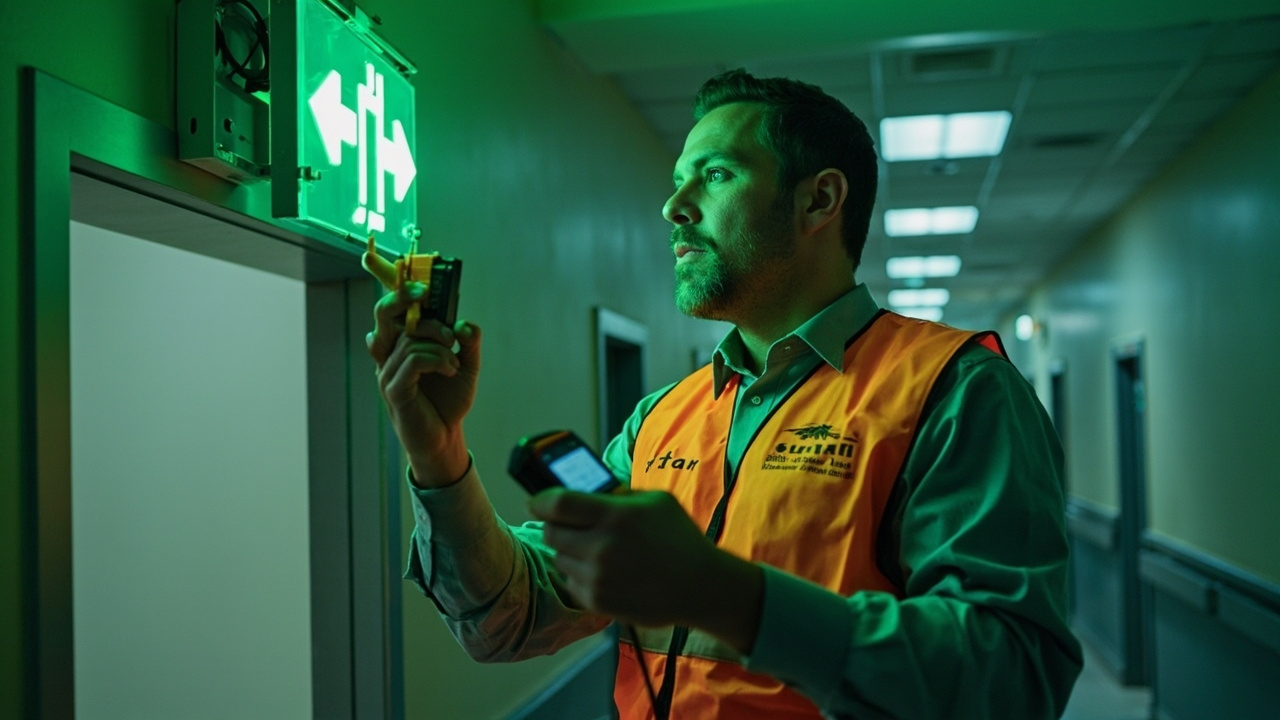
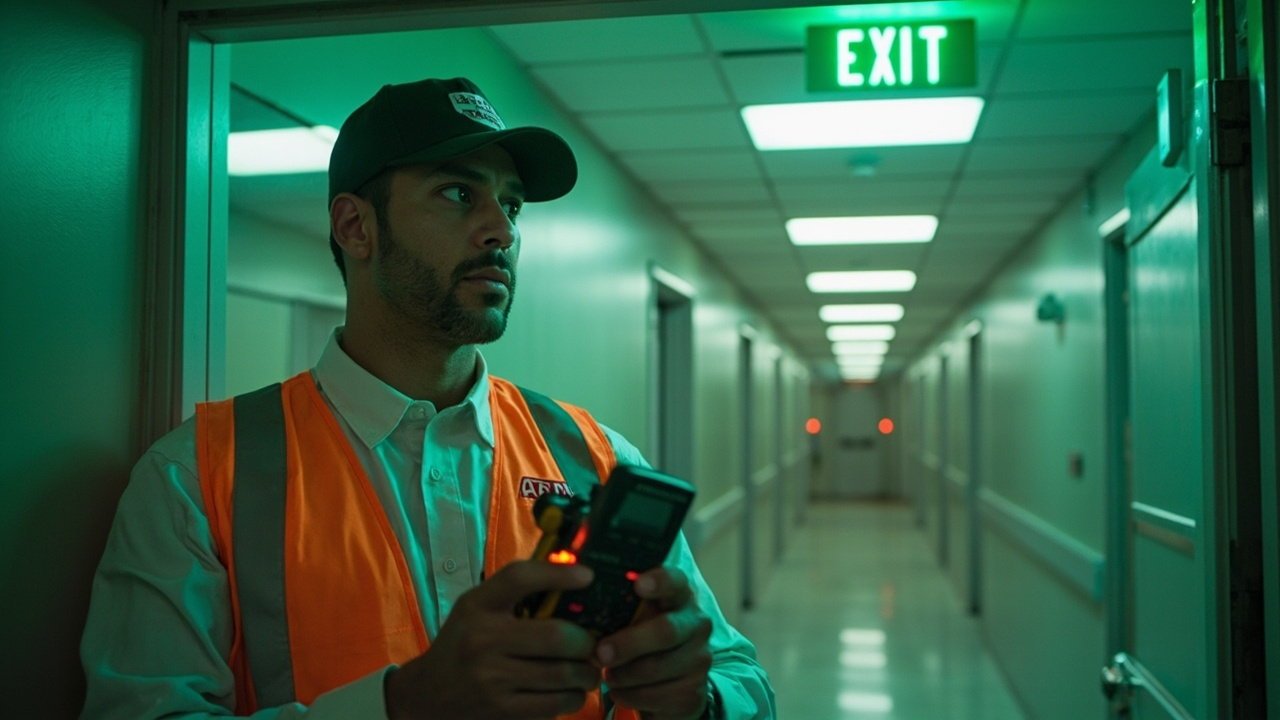
Your facility gets a comprehensive egress lighting survey using calibrated light meters to measure actual footcandle levels along exit paths. We photograph existing conditions, note fixture types and locations, and test battery backup duration on current equipment. The assessment identifies every code deficiency and coverage gap. You receive a written report with fixture specifications, installation locations, and cost breakdown before any work begins. This documentation satisfies due diligence requirements if you need to demonstrate code compliance efforts to inspectors or insurance underwriters while corrections are in progress.

Installation Quality and Code Compliance

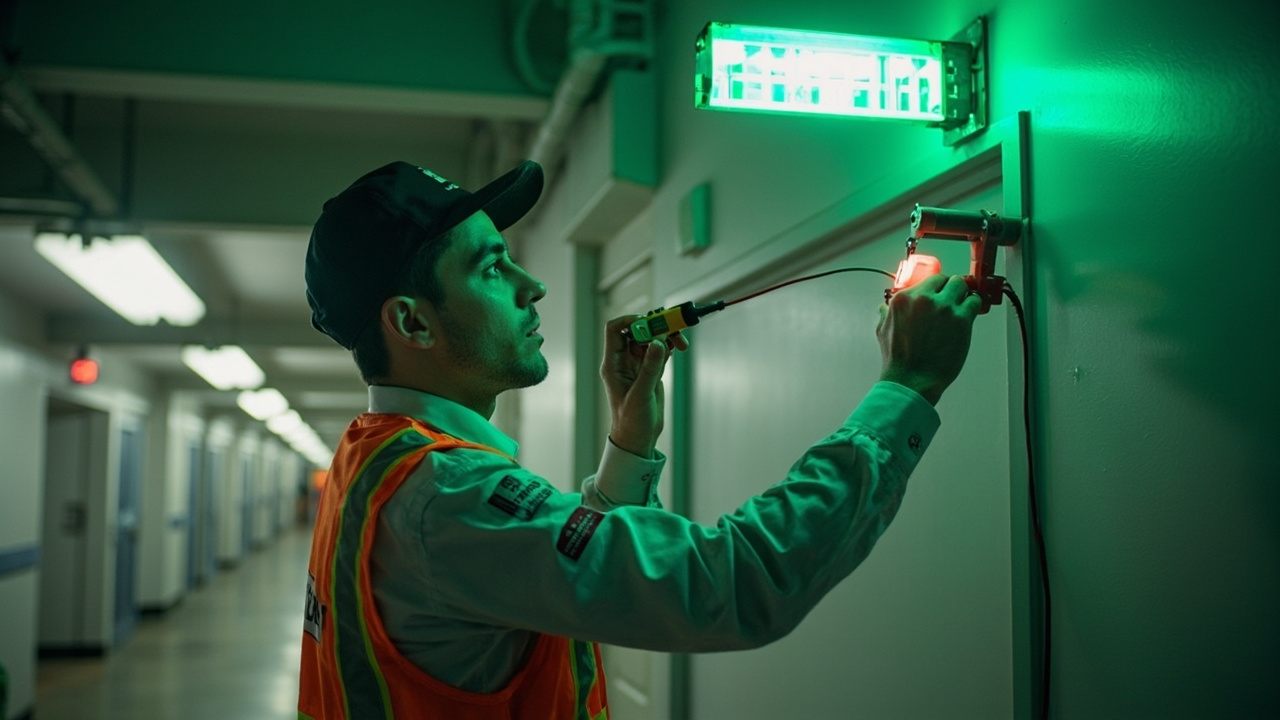
Every emergency lighting fixture gets mounted according to manufacturer specifications and NFPA 101 spacing requirements, with proper circuit separation per NEC Article 700 for emergency systems. We use commercial-grade mounting hardware rated for the installation environment, whether that means corrosion-resistant hardware for humid warehouse spaces or seismic-rated mounts for equipment rooms. Each fixture undergoes simulated power failure testing to verify proper transfer time, battery capacity, and illumination levels. You receive test documentation showing measured performance at each location, creating an inspection-ready compliance record from day one.

Ongoing Testing and Maintenance Support

NFPA 101 requires monthly visual inspections and annual 90-minute discharge testing for all emergency lighting systems. We provide maintenance agreements that handle both requirements, including documentation that satisfies inspector requests. Our technicians track battery replacement cycles, check self-diagnostic systems for fault indicators, and measure illumination levels to catch degradation before it becomes a code violation. You receive annual compliance reports suitable for insurance reviews and building permit renewals. Between scheduled services, we respond to service calls for failed fixtures or system faults that show up on diagnostic indicators, keeping your emergency egress lighting in continuous compliance.

Frequently Asked Questions

You Have Questions,
We Have Answers

What is the difference between exit lights and emergency lights? +

Exit lights mark the path out of a building. They display the word EXIT and guide occupants to doors during normal and emergency conditions. Emergency lights provide illumination when normal power fails. They activate automatically during outages to light hallways, stairwells, and exit routes. Exit lights are directional markers. Emergency lights are backup illumination. Houston commercial buildings require both systems to meet code. Exit lights stay on continuously. Emergency lights engage only during power loss. Both systems protect occupants during evacuations and ensure compliance with fire safety regulations.

How much does it cost to install emergency exit sign? +

Installation costs depend on several factors. New construction projects typically cost less than retrofits. The number of units, mounting height, wiring complexity, and existing electrical infrastructure affect pricing. Battery-powered units require less labor than hardwired systems with remote battery packs. Houston commercial buildings often need junction box modifications to accommodate modern LED units. Code-compliant installations require proper placement calculations, which involve measuring foot-candle levels along egress paths. Facilities with multiple floors or long corridors require more units. Get a site assessment to determine exact quantities and installation complexity before budgeting.

What are the NEC requirements for emergency egress lighting? +

NEC Article 700 governs emergency egress lighting. Systems must provide illumination along the entire exit path, including corridors, stairways, and exterior discharge areas. Lighting levels must reach a minimum of one foot-candle measured at floor level. The system must activate within ten seconds of power loss and maintain illumination for ninety minutes minimum. Emergency lighting requires a separate circuit from general lighting. Testing must occur monthly for thirty seconds and annually for ninety minutes. Houston commercial properties follow these NEC standards, and local inspectors verify compliance during occupancy permits.

What are the three types of emergency lighting? +

The three types are maintained, non-maintained, and sustained. Maintained emergency lights operate continuously, drawing power from the main supply and switching to battery during outages. Non-maintained lights remain off until power fails, then battery backup engages automatically. Sustained lights combine both functions with dual lamp heads. One lamp operates continuously while the second activates only during emergencies. Houston warehouses often use non-maintained systems to reduce energy consumption. Office buildings typically install maintained exit signs for constant visibility. Industrial facilities may deploy sustained systems in critical zones where backup illumination must remain visible at all times.

Do emergency exit lights have to be hardwired? +

No, several installation options exist. Traditional hardwired systems connect directly to building electrical circuits with battery backup components. Self-contained battery units mount anywhere without direct wiring to emergency circuits. These plug into standard outlets or use internal batteries charged by AC power. Remote battery packs offer centralized backup power for multiple fixtures. Houston retrofits often use self-contained units to avoid expensive rewiring in older buildings. New construction typically specifies hardwired systems integrated with fire alarm panels. Code compliance depends on proper function and testing, not installation method. Choose based on building layout and budget constraints.

Should emergency exit lights be on all the time? +

Exit signs must remain illuminated continuously during business hours and whenever the building is occupied. Most facilities keep them on constantly to ensure compliance and avoid confusion. The always-on approach eliminates the risk of forgetting to activate signs before occupancy. LED technology makes continuous operation cost-effective, drawing minimal power compared to older incandescent models. Houston commercial properties benefit from constant illumination because it provides immediate directional guidance during emergencies. Battery backup systems keep signs lit during power failures. Some newer systems use photoluminescent materials that glow without electricity, but most facilities maintain powered signs for reliability.

Do I need an electrician to fit an outside light? +

Yes, hire a licensed electrician for exterior lighting installation. Outdoor electrical work involves weatherproofing, proper junction box mounting, GFCI protection, and conduit installation. Houston humidity and weather exposure require specific materials and sealing methods to prevent moisture intrusion and corrosion. Incorrect installations create shock hazards and code violations. Exterior circuits need appropriate load calculations and breaker sizing. Electricians ensure fixtures meet wet location ratings and install proper grounding. DIY installations often fail inspection and create liability issues. Licensed professionals carry insurance and understand local permitting requirements. Commercial properties must use qualified contractors to maintain warranty coverage and safety standards.

What are the common problems with exit signs? +

Common problems include bulb burnout, battery failure, faulty wiring connections, and broken lenses. Older signs experience ballast failure or capacitor degradation. LED conversions sometimes create compatibility issues with existing emergency circuits. Battery backup units lose charge capacity over time and fail to maintain ninety-minute runtime requirements. Corrosion from Houston humidity damages electrical contacts and mounting hardware. Improper testing leads to undetected failures. Signs mounted incorrectly create visibility gaps along egress paths. Inadequate maintenance schedules allow problems to compound. Regular monthly and annual testing identifies issues before inspections. Replace batteries every three to five years and LED components per manufacturer specifications.

How much do electricians charge to put up lights? +

Labor rates vary based on project scope and complexity. Simple fixture replacements take less time than complete circuit installations. Commercial projects involving emergency lighting require licensed electricians familiar with NEC Article 700 requirements. Hourly rates reflect experience level, licensing, and insurance coverage. Houston commercial work often involves prevailing wage requirements for certain contracts. New installations require load calculations, permit pulls, and inspection scheduling, which add to total costs. Retrofit projects in older buildings may encounter unforeseen wiring issues that extend labor time. Request itemized estimates showing labor hours, materials, permits, and testing documentation to compare proposals accurately.

What is the 2 6 12 rule for outlets? +

This rule applies to residential bedroom outlet spacing, not emergency lighting. The National Electrical Code requires receptacles placed so no point along the wall is more than six feet from an outlet. Outlets must be installed within twelve feet of each other, measured along the floor line. Any wall space two feet or wider needs an outlet. This prevents excessive extension cord use and reduces fire hazards. Houston residential electricians follow this standard during new construction and remodels. Commercial buildings have different outlet requirements based on occupancy type and equipment needs. Emergency exit lighting follows separate NEC articles governing egress illumination.

How Houston's Hurricane Risk and Grid Vulnerability Make Emergency Exit Lighting Critical

Houston facilities face extended power outages during hurricane season and winter storm events, as demonstrated by Harvey in 2017 and the 2021 freeze that left buildings without grid power for days. Your emergency egress lighting must maintain safe evacuation capability throughout these events, which means battery backup systems need capacity beyond the code-minimum 90 minutes. Facilities near the coast deal with salt air that accelerates corrosion in fixture housings and electrical connections, requiring upgraded materials and more frequent inspection cycles to maintain reliable operation when storms actually hit.

Houston's commercial building stock includes many older structures built before current LED exit sign technology and self-diagnostic monitoring systems became standard. As these buildings undergo tenant improvements or ownership changes, emergency lighting upgrades become necessary for code compliance and insurance requirements. We work with local fire marshals and building officials regularly, so we understand which violations trigger immediate correction orders versus advisory notices. That experience helps prioritize your upgrade budget toward the deficiencies that actually matter for maintaining occupancy and avoiding operational shutdowns.

Electrical Services in The Houston Area

Looking for reliable electricians near you? Titan Electricians Houston proudly serves homeowners and businesses across the greater Houston area with expert electrical repairs, panel upgrades, lighting installations, wiring services, and 24/7 emergency support. From The Woodlands to Pearland, our licensed electricians are ready to deliver safe, efficient, and code-compliant solutions. Use the map below to explore our service coverage and find fast, trusted electrical help in your neighborhood.

Address:
TitanElectriciansHouston, 2500 Summer St, Houston, TX, 77007

Additional Services We Offer

Our news updates

Latest Articles & News from The Blogs

Lorem ipsum dolor sit amet. Aut expedita quaerat quo eligendi numquam et laudantium perspiciatis qui minima expedita rem consequatur ducimus.…

Test Blog 4

Lorem ipsum dolor sit amet. Aut expedita quaerat quo eligendi numquam et laudantium perspiciatis qui minima expedita rem consequatur ducimus.…

Test Blog 3

Lorem ipsum dolor sit amet. Aut expedita quaerat quo eligendi numquam et laudantium perspiciatis qui minima expedita rem consequatur ducimus.…

Test Blog 2

Lorem ipsum dolor sit amet. Aut expedita quaerat quo eligendi numquam et laudantium perspiciatis qui minima expedita rem consequatur ducimus.…

Contact Us

Do not wait for a fire marshal violation to discover your emergency lighting system has failed batteries or inadequate coverage. Call Titan Electricians Houston at (281) 552-7811 for a compliance survey and same-week correction of any deficiencies that could affect your occupancy status.