
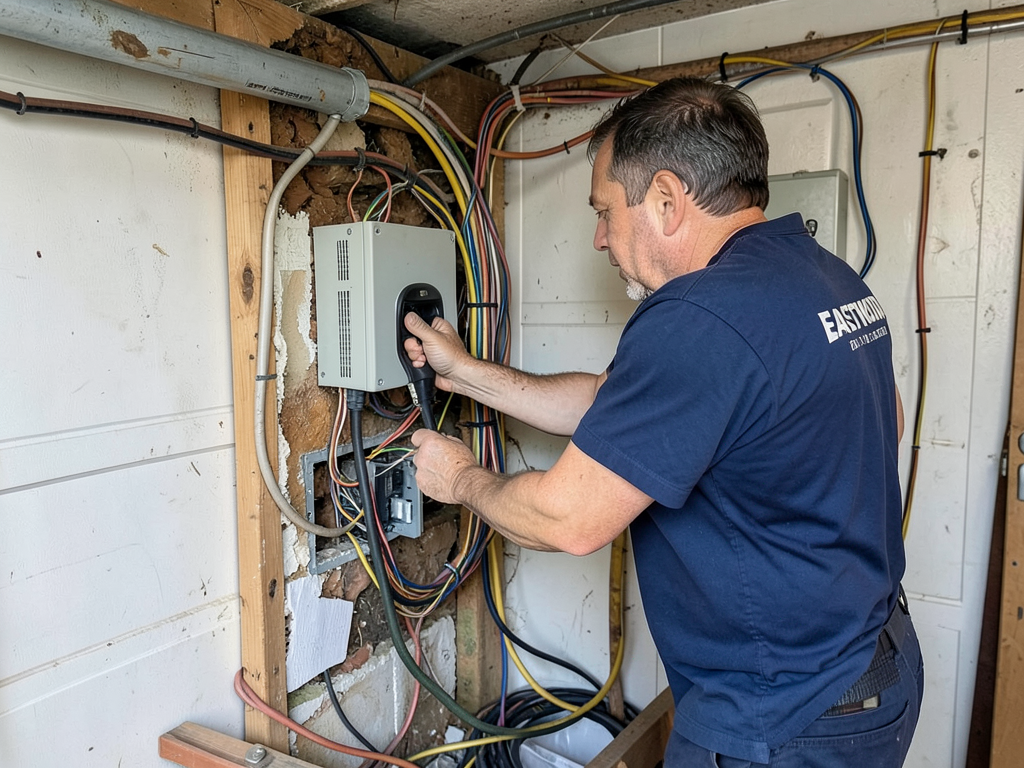
Installing an EV charger in an older Eastwood garage with limited power is a common challenge for Houston homeowners. Many houses built before 1980 were designed for basic electrical needs, not the high-demand charging requirements of modern electric vehicles. This guide walks you through the technical realities, local permitting requirements, and smart solutions that make EV ownership possible even in homes with 60 or 100-amp service panels. How to Get a Tesla Home Charger Installed in Katy Without the Stress.
Understanding Your Eastwood Home’s Electrical System
Eastwood was developed in the early 1900s and many homes retain their original electrical infrastructure. This means you might find cloth-covered wiring, ungrounded outlets, and service panels rated for 60 or 100 amps total. These systems were designed when homes had minimal electrical loads compared to today’s standards. The Top Rated Licensed Electricians Serving the River Oaks Area.
A typical Level 2 EV charger requires a dedicated 240-volt circuit. Most Tesla Wall Connectors and universal chargers need either a 40-amp or 50-amp circuit, which translates to roughly 9,600 to 12,000 watts of continuous power draw. When your entire home is only rated for 100 amps, adding this load can overload your system.
The challenge becomes more complex when your garage is detached. Detached structures require separate circuit runs from your main panel, often necessitating trenching and outdoor conduit installation. This adds both complexity and cost to the project. How to Plan Your Outdoor Landscape Lighting in The Woodlands Without Overspending.
Load Calculations: The First Step
Before installing any EV charger, a licensed electrician must perform a load calculation. This determines whether your existing panel can handle the additional demand or if an upgrade is necessary. The calculation considers:. Read more about Five Electrical Red Flags to Look for Before Buying an Older House in the Third Ward.
- Your home’s square footage and number of circuits
- Major appliances and their amperage requirements
- Heating and cooling system loads
- Lighting and general receptacle circuits
- The proposed EV charger’s power draw
For a 2,000-square-foot Eastwood home with gas appliances, a 100-amp panel might be operating near capacity. Adding a 50-amp EV charger circuit could push the total load beyond safe limits, triggering nuisance breaker trips or creating fire hazards. City of Houston permitting requirements.
According to the National Electrical Code, continuous loads (those operating for three hours or more) should only use 80% of a circuit’s rated capacity. This means a 50-amp circuit should only carry 40 amps continuously, further complicating load management in older homes.
Panel Upgrade Options
When your existing panel cannot support an EV charger, upgrading to a larger capacity is often the most straightforward solution. A 200-amp panel upgrade typically costs between $2,500 and $4,500 in the Houston area, depending on your home’s specific requirements.
The upgrade process involves:
- Removing the existing panel
- Installing a new meter base if required
- Running new service conductors from the transformer
- Installing the new 200-amp main breaker panel
- Distributing existing circuits to the new panel
For Eastwood homes, the upgrade must comply with City of Houston electrical codes, which are based on the National Electrical Code but include local amendments. The work requires permits and inspections to ensure safety and code compliance.
Smart Solutions: Load Management Systems
Not every homeowner wants to invest in a full panel upgrade. Smart load management systems offer alternatives that can make EV charging possible without increasing your home’s total electrical capacity.
Load shedding devices monitor your home’s electrical usage in real-time. When major appliances turn on, the system temporarily reduces EV charging power to prevent overloads. When demand drops, charging resumes at full speed.
Popular options include:
- DCC (Diversified Control Center) systems that integrate with your EV charger
- Wallbox smart chargers with built-in load management
- Emporia Vue energy monitors that control charging based on home usage
These systems typically cost $500 to $1,500 installed, significantly less than a panel upgrade. However, they may extend charging times during periods of high home electrical usage.
Detached Garage Considerations
Many Eastwood homes feature detached garages, which adds another layer of complexity to EV charger installation. Running power to a detached structure requires:. Read more about Why your Fall Creek garage needs a dedicated circuit for that new smart opener.
- Underground conduit installation (typically 18-24 inches deep)
- Proper burial-rated cable (UF-B or direct burial rated)
- A subpanel in the garage for circuit distribution
- Weatherproof exterior-rated devices and enclosures
The trenching process must avoid existing utilities and comply with local digging regulations. In Houston’s clay soil, excavation can be challenging, especially after heavy rains when the ground becomes saturated.
Weather protection is critical for Houston’s climate. Outdoor-rated EV chargers and conduit must withstand extreme humidity, intense sun exposure, and potential hurricane-force winds. Proper grounding and surge protection become even more important for detached structures. Protect Your Tech With Professional Whole House Surge Protection in Cypress.
City of Houston Permitting Process
Installing an EV charger in Houston requires proper permitting through the City of Houston Public Works Department. The process includes:
- Submitting electrical plans for review
- Paying permit fees based on project scope
- Scheduling inspections at key project stages
- Obtaining final approval before use
For panel upgrades or new service installations, additional permits may be required from CenterPoint Energy, Houston’s primary electric utility. They must approve service conductor sizing and meter base configurations.
The permitting timeline typically takes 3-5 business days for initial review, with inspections scheduled 24-48 hours after request. Rush permits are available for an additional fee if you need faster turnaround.
Cost Factors to Consider
The total cost of installing an EV charger in an older Eastwood garage varies significantly based on your home’s specific conditions. Here’s a breakdown of potential expenses:
| Component | Cost Range |
|---|---|
| Basic Level 2 charger (hardware only) | $300 – $700 |
| Professional installation (standard) | $500 – $1,500 |
| Panel upgrade (100A to 200A) | $2,500 – $4,500 |
| Load management system | $500 – $1,500 |
| Trenching for detached garage | $15 – $25 per linear foot |
| Permits and inspections | $100 – $500 |
Your final cost will depend on factors like panel location, trench length, and whether you need a new service upgrade from CenterPoint Energy.
Federal Tax Credits and Local Incentives
Homeowners installing EV charging equipment may qualify for federal tax credits under the Inflation Reduction Act. The Residential Clean Energy Credit covers 30% of installation costs, including labor, for equipment placed in service after January 1, 2023. Federal tax credits for EV charging equipment.
The credit applies to:
- EV charging station hardware
- Installation labor and wiring
- Necessary electrical upgrades
- Permitting fees
There’s no maximum credit amount, and the credit is available through 2032. However, you must keep all receipts and documentation for your tax filing.
CenterPoint Energy occasionally offers rebates for energy-efficient home improvements, though EV charger-specific incentives vary by year. Check their website or contact them directly for current programs.
Choosing the Right Equipment
EV charger selection depends on your vehicle, electrical capacity, and usage patterns. Common options include:
| Brand/Model | Power Output | Smart Features | Price Range |
|---|---|---|---|
| Tesla Wall Connector | Up to 48A | Yes | $400 – $550 |
| ChargePoint Home Flex | Up to 50A | Yes | $500 – $700 |
| Emporia EV Charger | Up to 48A | Yes | $400 – $600 |
| JuiceBox Pro | Up to 48A | Yes | $500 – $700 |
For older homes with limited power, consider chargers with adjustable amperage settings. These allow you to reduce charging speed to stay within your home’s electrical capacity while still providing adequate charging for daily use.
Safety Considerations
Safety is paramount when upgrading electrical systems in older homes. Common hazards in Eastwood houses include:
- Aluminum wiring (used in homes built between 1965-1973)
- Double-tapped breakers (multiple wires on a single breaker)
- Missing or inadequate grounding
- Overloaded circuits from decades of modifications
A thorough electrical inspection should identify these issues before proceeding with EV charger installation. Addressing safety concerns may add to your project cost but prevents potential fire hazards.
Ground Fault Circuit Interrupter (GFCI) protection is required for all garage circuits in Houston. This safety device prevents electrical shock by quickly cutting power when it detects ground faults.
Timeline and What to Expect
The entire process from initial consultation to completed installation typically takes 1-3 weeks, depending on:
- Permit approval times
- Equipment availability
- Weather conditions for outdoor work
- Complexity of your home’s electrical system
Basic installations with existing panel capacity might be completed in a single day. Panel upgrades or detached garage installations typically require 2-3 days.
During the work, you’ll experience temporary power interruptions. A full panel upgrade requires shutting off power to your entire home for several hours.
Maintenance and Long-Term Considerations
Once installed, your EV charging system requires minimal maintenance. However, consider these long-term factors:
- Annual visual inspections of charging equipment and connections
- Checking for corrosion on outdoor connections (especially important in Houston’s humid climate)
- Monitoring for nuisance breaker trips that might indicate developing issues
- Planning for future electrical needs as you add more electric devices
Quality installation with proper materials and code compliance ensures your system will safely serve your needs for years to come.
Making the Right Choice for Your Home
The best solution for your Eastwood EV charging needs depends on your specific situation. Consider these factors:
- How many miles do you drive daily? (determines charging speed needed)
- What’s your budget for upgrades vs. smart solutions?
- Do you plan to add more electric vehicles in the future?
- How long do you plan to stay in your current home?
For many Eastwood homeowners, starting with a load management system provides a cost-effective way to begin EV ownership. You can always upgrade to a larger panel later if your needs change.
Working with a licensed electrician familiar with Houston’s older homes ensures you get solutions tailored to your property’s specific challenges and opportunities.
Frequently Asked Questions
Can I install an EV charger myself in my Eastwood garage?
No, EV charger installation requires a licensed electrician in Houston. Texas law requires professional installation for any new 240-volt circuit, and improper installation creates serious fire and safety hazards. Additionally, City of Houston permits and inspections are mandatory.
How much will my electric bill increase with an EV charger?
A typical EV adds 10-20 kWh per day to your electric usage, depending on your vehicle and driving habits. At Houston’s average electricity rate of $0.12 per kWh, this translates to $1.20 to $2.40 per day, or $36 to $72 per month. Many utility companies offer EV-specific rate plans that can reduce these costs.
Do I need a permit for a simple EV charger installation?
Yes, any new dedicated circuit for EV charging requires an electrical permit from the City of Houston. The permit ensures your installation meets code requirements and will be inspected for safety. The cost is typically $100-$300 depending on the project scope.
Next Steps for Your Eastwood EV Charging Project
Ready to install an EV charger in your Eastwood garage? Start with a professional electrical assessment to understand your home’s capacity and options. A licensed electrician can perform load calculations, identify potential issues, and recommend the most cost-effective solution for your specific situation.
Don’t let limited electrical capacity prevent you from enjoying the benefits of electric vehicle ownership. With proper planning and professional installation, even older Eastwood homes can safely support EV charging.
Call us today at (281) 552-7811 to schedule your free EV charging assessment. We’ll evaluate your home’s electrical system, discuss your charging needs, and provide a detailed quote for bringing Level 2 charging to your Eastwood property.
Take the first step toward convenient, cost-effective home charging. Your electric vehicle deserves a reliable power source, and we have the expertise to make it happen safely in your older Houston home. Finding a Reliable Electrician for Your Sugar Land Kitchen Remodel.
You may also find this helpful. What Midtown residents need to know about charging an electric car while renting.
{
“@context”: “https://schema.org”,
“@type”: “BlogPosting”,
“headline”: “Installing an EV Charger in an Older Eastwood Garage With Limited Power”,
“description”: “Need an EV charger for your older Eastwood garage? Learn about panel upgrades, load calculations, and smart solutions for homes with limited electrical capacity.”,
“wordCount”: 1914,
“datePublished”: “2026-06-12T07:52:00.000Z”,
“dateModified”: “2026-06-12T07:52:00.000Z”,
“inLanguage”: “en-US”,
“mainEntityOfPage”: {
“@type”: “WebPage”,
“@id”: “https://titanelectricianshouston.com”
},
“publisher”: {
“@type”: “LocalBusiness”,
“name”: “Titan Electricians Houston”,
“url”: “https://titanelectricianshouston.com”
},
“author”: {
“@type”: “Organization”,
“name”: “Titan Electricians Houston”,
“url”: “https://titanelectricianshouston.com”
},
“image”: {
“@type”: “ImageObject”,
“url”: “https://titanelectricianshouston.com/wp-content/uploads/2026/03/installing-an-ev-charger-in-an-older-eastwood-gara-1.png”
}
}
{
“@context”: “https://schema.org”,
“@type”: “Electrician”,
“name”: “Titan Electricians Houston”,
“url”: “https://titanelectricianshouston.com”,
“address”: {
“@type”: “PostalAddress”,
“addressLocality”: “Houston”
},
“areaServed”: {
“@type”: “City”,
“name”: “Houston”
}
}
{
“@context”: “https://schema.org”,
“@type”: “FAQPage”,
“mainEntity”: [
{
“@type”: “Question”,
“name”: “Can I install an EV charger myself in my Eastwood garage?”,
“acceptedAnswer”: {
“@type”: “Answer”,
“text”: “No, EV charger installation requires a licensed electrician in Houston. Texas law requires professional installation for any new 240-volt circuit, and improper installation creates serious fire and safety hazards. Additionally, City of Houston permits and inspections are mandatory.”
}
},
{
“@type”: “Question”,
“name”: “How much will my electric bill increase with an EV charger?”,
“acceptedAnswer”: {
“@type”: “Answer”,
“text”: “A typical EV adds 10-20 kWh per day to your electric usage, depending on your vehicle and driving habits. At Houston’s average electricity rate of $0.12 per kWh, this translates to $1.20 to $2.40 per day, or $36 to $72 per month. Many utility companies offer EV-specific rate plans that can reduce these costs.”
}
},
{
“@type”: “Question”,
“name”: “Do I need a permit for a simple EV charger installation?”,
“acceptedAnswer”: {
“@type”: “Answer”,
“text”: “Yes, any new dedicated circuit for EV charging requires an electrical permit from the City of Houston. The permit ensures your installation meets code requirements and will be inspected for safety. The cost is typically $100-$300 depending on the project scope.”
}
}
]
}
{
“@context”: “https://schema.org”,
“@type”: “BreadcrumbList”,
“itemListElement”: [
{
“@type”: “ListItem”,
“position”: 1,
“name”: “Home”,
“item”: “https://titanelectricianshouston.com”
},
{
“@type”: “ListItem”,
“position”: 2,
“name”: “Blog”,
“item”: “https://titanelectricianshouston.com/blog”
},
{
“@type”: “ListItem”,
“position”: 3,
“name”: “Installing an EV Charger in an Older Eastwood Garage With Limited Power”
}
]
}
{
“@context”: “https://schema.org”,
“@type”: “Service”,
“serviceType”: “Electricians”,
“provider”: {
“@type”: “LocalBusiness”,
“name”: “Titan Electricians Houston”,
“url”: “https://titanelectricianshouston.com”
},
“areaServed”: {
“@type”: “City”,
“name”: “Houston”
},
“description”: “Need an EV charger for your older Eastwood garage? Learn about panel upgrades, load calculations, and smart solutions for homes with limited electrical capacity.”
}