
Professional Art Lighting Tips to Make Your Museum District Collection Shine
Your Museum District art collection deserves lighting that enhances its beauty while protecting its value. Houston’s unique climate and the technical demands of fine art preservation require specialized knowledge that goes beyond standard electrical work. This guide covers everything you need to know about professional art lighting installation in Houston’s cultural heart. Protect Your Tech With Professional Whole House Surge Protection in Cypress.
Why Museum District Art Collectors Need Specialized Lighting
The Museum District houses some of Houston’s most valuable private collections alongside world-class institutions. These spaces face unique challenges including high humidity levels that can affect both artwork and electrical components, intense summer heat that can cause thermal damage, and the need for precise color rendering to showcase artwork as the artist intended. Electrical Houston.
Professional art lighting installation requires understanding both the technical aspects of electrical work and the aesthetic principles of art presentation. A licensed Houston electrician with experience in fine art lighting knows how to balance illumination quality with preservation needs. The Top Rated Licensed Electricians Serving the River Oaks Area.
Essential Art Lighting Technologies for Houston Collections
Several lighting technologies serve different purposes in art display. Understanding these options helps you make informed decisions about your collection’s illumination. Commercial Lighting Retrofits.
LED Picture Lights
LED picture lights mount directly on or near the artwork frame. Modern LED technology offers excellent color rendering with minimal heat emission. For Houston’s humid climate, look for fixtures with sealed housings to prevent moisture damage. These lights provide focused illumination perfect for smaller pieces or when wall modifications aren’t possible.
Recessed Framing Projectors
Framing projectors create a precise pool of light that matches the artwork’s dimensions exactly. These optical devices use lenses to shape light, eliminating spill onto surrounding walls. They’re ideal for Museum District homes where clean, minimalist aesthetics matter. The precision also means less wasted light and energy.
Track Lighting Systems
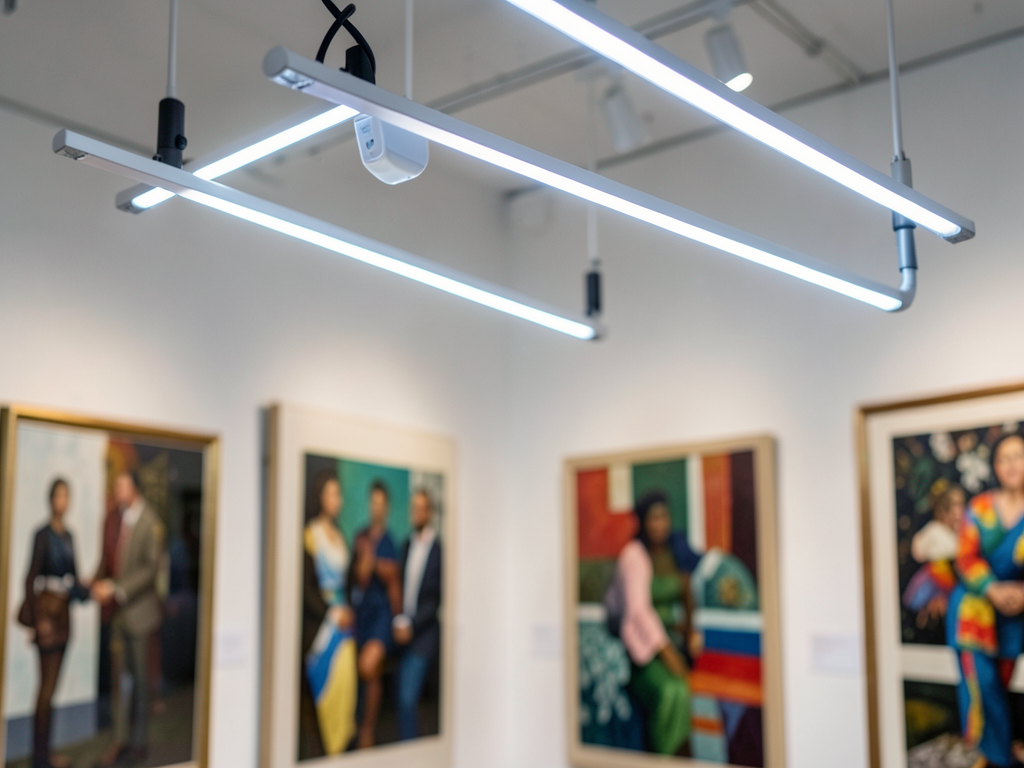
Track lighting offers flexibility for rotating collections or gallery spaces. Modern low-voltage track systems can be surface-mounted or recessed. They work well in Houston’s contemporary homes where ceiling modifications are easier to accommodate. The ability to reposition fixtures makes track lighting practical for evolving collections.. Read more about The pros and cons of low voltage versus line voltage lighting for your Sugar Land patio.
Wall Washers and Recessed Pinhole Lights
Wall washers create even illumination across large walls or multiple pieces. Recessed pinhole lights provide subtle accent lighting from above. Both work well in Houston’s high-ceilinged Museum District homes where dramatic lighting effects enhance architectural features.
Technical Specifications That Protect Your Investment
Understanding the technical aspects of art lighting helps you communicate effectively with your electrician and ensures your collection receives proper care.
Color Rendering Index (CRI) and R9 Values
CRI measures how accurately a light source displays colors compared to natural sunlight. For art lighting, you need a CRI of 95 or higher. The R9 value specifically measures how well reds appear accurate a critical factor for paintings with warm tones. Many Houston art collectors don’t realize that standard LEDs often have poor R9 performance.
Color Temperature and Kelvin Ratings
Color temperature affects how artwork appears. Most art lighting falls between 2700K and 3500K. Lower numbers create warmer, more inviting light while higher numbers produce cooler, more clinical illumination. The right temperature depends on your artwork’s dominant colors and your home’s interior design.
UV Protection and Heat Management
UV radiation causes irreversible damage to artwork over time. Quality art lighting fixtures include UV filters or use UV-free LED technology. Heat management is equally important in Houston’s climate. Fixtures should dissipate heat away from artwork while maintaining consistent performance in high-humidity environments. UV protection guidelines.
Dimming Systems and Controls
Professional dimming systems allow you to adjust lighting for different times of day or special occasions. Smart home integration lets you control lighting through apps or voice commands. Houston’s luxury homes often incorporate these features for convenience and energy efficiency.
The Houston Art Scene: Residential and Gallery Solutions
Houston’s Museum District and surrounding areas like West University and River Oaks have distinct lighting needs based on building architecture and collection types.
Historic homes in the Museum District often require retrofitting existing electrical systems to accommodate modern art lighting. This might involve upgrading electrical panels, adding dedicated circuits, or installing specialized transformers for low-voltage systems.. Read more about What to look for in the electrical panel when touring older homes in the Museum District.
Contemporary homes in West University typically have more flexible ceiling structures, making recessed installations easier. However, these homes often feature open floor plans where lighting design must consider sight lines from multiple angles.
Gallery spaces require different approaches than residential installations. Commercial galleries need higher light levels, more uniform coverage, and often require compliance with specific building codes for public spaces.
Professional Installation Process for Art Lighting
Quality art lighting installation follows a systematic process that ensures both technical performance and aesthetic satisfaction.
- Initial Consultation and Assessment
The electrician evaluates your space, artwork dimensions, and electrical infrastructure. They discuss your lighting goals, budget, and any preservation concerns specific to your collection.
- Design Planning and Fixture Selection
Based on the assessment, the electrician creates a lighting plan that addresses your specific needs. This includes selecting appropriate fixture types, determining optimal placement, and planning electrical modifications.
- Electrical Preparation and Wiring
Installation begins with any necessary electrical upgrades. This might include adding dedicated circuits, installing junction boxes, or running new wiring through walls and ceilings.
- Fixture Mounting and Aiming
Fixtures are installed according to the design plan. This step requires precision to ensure proper light distribution and minimal glare. For framing projectors, this involves careful alignment to achieve the perfect light shape.
- Testing and Adjustment
Once installed, the system undergoes thorough testing. Light levels are measured, color accuracy is verified, and final adjustments are made to achieve optimal illumination for each piece.
Why Choose a Licensed Houston Electrician for Fine Art Lighting
Art lighting installation requires expertise beyond basic electrical work. Here’s why professional licensing matters for your Museum District collection.
Licensed electricians understand Houston’s building codes and permit requirements. They know how to work safely in occupied homes and can coordinate with interior designers or gallery curators. Most importantly, they carry insurance that protects you if something goes wrong during installation.
Unlicensed contractors might offer lower prices, but they often lack the technical knowledge needed for art preservation. They may not understand CRI specifications, UV protection requirements, or proper heat management for delicate artwork.
Maintenance and Care for Art Lighting Systems
Professional art lighting systems require regular maintenance to perform optimally. Houston’s climate creates specific challenges including humidity-related corrosion and dust accumulation.
Schedule annual inspections to check fixture alignment, clean lenses, and verify electrical connections. Replace LED modules every 5-7 years even if they’re still functioning, as light quality degrades over time. Clean fixtures regularly to prevent dust buildup that can affect light quality and heat dissipation.
Cost Factors for Professional Art Lighting Installation
Art lighting costs vary based on several factors. Simple LED picture lights might cost a few hundred dollars per fixture installed. Complex framing projector systems can cost several thousand dollars per light when you factor in specialized equipment and precise installation requirements.
Factors affecting cost include the number of fixtures needed, the complexity of electrical modifications required, the type of control systems desired, and whether your home needs electrical panel upgrades to support the new lighting.
Comparing Art Lighting Technologies
| Technology | Best For | Cost Range | Installation Complexity |
|---|---|---|---|
| LED Picture Lights | Small pieces, rental properties | $300-$800 per fixture | Low |
| Framing Projectors | High-end collections, minimalist design | $2,000-$5,000 per fixture | High |
| Track Lighting | Rotating collections, galleries | $500-$2,000 per track section | Medium |
| Wall Washers | Large installations, architectural lighting | $400-$1,500 per fixture | Medium |
Smart Home Integration for Art Lighting
Modern art lighting often integrates with smart home systems. This allows for automated lighting scenes, remote control, and energy monitoring. Popular systems in Houston include Lutron, Control4, and Crestron.
Smart integration lets you create lighting scenes for different times of day or occasions. You might have a bright viewing mode for daytime appreciation and a subtle accent mode for evening entertaining.
Common Mistakes to Avoid
Many art collectors make preventable mistakes when installing lighting. Here are the most common issues we see in Houston homes.
- Using fixtures with poor CRI ratings that distort artwork colors
- Installing lights too close to artwork, causing heat damage
- Choosing fixtures without UV protection for valuable pieces
- Neglecting to plan for future additions to the collection
- Using incompatible dimming systems that cause flickering
Local Building Codes and Requirements
Houston follows the National Electrical Code with some local amendments. Art lighting installations must comply with these regulations, particularly regarding electrical load calculations and fire safety. National Electrical Code standards.
Permits are typically required for new electrical circuits and major lighting installations. Your licensed electrician should handle this process, ensuring your installation meets all local requirements.
Frequently Asked Questions
How long does art lighting installation take?
Most residential installations take 1-3 days depending on complexity. Simple picture light installations might be completed in a single day, while comprehensive framing projector systems could require a week for electrical modifications and precise aiming.
Can I install art lighting myself?
Basic picture lights that plug into existing outlets can be DIY projects. However, hardwired installations, electrical modifications, and complex systems require licensed electricians to ensure safety and code compliance.
What’s the best lighting for oil paintings?
Oil paintings benefit from warm color temperatures (2700K-3000K) with high CRI ratings. Framing projectors or adjustable track lighting work well because they allow precise control over light distribution and intensity.
How do I protect artwork from light damage?
Use UV-filtered LED fixtures, limit exposure time with timers or smart controls, and maintain appropriate light levels. For extremely sensitive pieces, consider rotating displays or using lower light levels than you might prefer aesthetically.

Ready to Illuminate Your Collection?
Your Museum District art collection deserves lighting that enhances its beauty while preserving its value for generations. Professional art lighting installation requires technical expertise, aesthetic sensibility, and understanding of Houston’s unique climate challenges.
Don’t trust your valuable artwork to general handymen or DIY solutions. Contact our licensed Houston electricians today to schedule a consultation. We’ll assess your space, discuss your lighting goals, and create a custom solution that makes your collection shine.
Call us now at (281) 552-7811 to schedule your art lighting consultation. Your artwork deserves professional care.
You may also find this helpful. How to wire your Astrodome area media room for the ultimate theater experience.
You may also find this helpful. Improving retail store atmosphere in Greenway Plaza with custom track lighting.
{
“@context”: “https://schema.org”,
“@type”: “BlogPosting”,
“headline”: “Professional art lighting tips to make your Museum District collection shine”,
“description”: “Discover expert art lighting techniques for Houston’s Museum District. Learn about UV protection, color accuracy, and professional installation to preserve your collection.”,
“wordCount”: 1712,
“datePublished”: “2026-04-05T07:51:00.000Z”,
“dateModified”: “2026-04-05T07:51:00.000Z”,
“inLanguage”: “en-US”,
“mainEntityOfPage”: {
“@type”: “WebPage”,
“@id”: “https://titanelectricianshouston.com”
},
“publisher”: {
“@type”: “LocalBusiness”,
“name”: “Titan Electricians Houston”,
“url”: “https://titanelectricianshouston.com”
},
“author”: {
“@type”: “Organization”,
“name”: “Titan Electricians Houston”,
“url”: “https://titanelectricianshouston.com”
},
“image”: {
“@type”: “ImageObject”,
“url”: “https://titanelectricianshouston.com/wp-content/uploads/2026/03/professional-art-lighting-tips-to-make-your-museum-1.png”
}
}
{
“@context”: “https://schema.org”,
“@type”: “Electrician”,
“name”: “Titan Electricians Houston”,
“url”: “https://titanelectricianshouston.com”,
“address”: {
“@type”: “PostalAddress”,
“addressLocality”: “Houston”
},
“areaServed”: {
“@type”: “City”,
“name”: “Houston”
}
}
{
“@context”: “https://schema.org”,
“@type”: “FAQPage”,
“mainEntity”: [
{
“@type”: “Question”,
“name”: “How long does art lighting installation take?”,
“acceptedAnswer”: {
“@type”: “Answer”,
“text”: “Most residential installations take 1-3 days depending on complexity. Simple picture light installations might be completed in a single day, while comprehensive framing projector systems could require a week for electrical modifications and precise aiming.”
}
},
{
“@type”: “Question”,
“name”: “Can I install art lighting myself?”,
“acceptedAnswer”: {
“@type”: “Answer”,
“text”: “Basic picture lights that plug into existing outlets can be DIY projects. However, hardwired installations, electrical modifications, and complex systems require licensed electricians to ensure safety and code compliance.”
}
},
{
“@type”: “Question”,
“name”: “What’s the best lighting for oil paintings?”,
“acceptedAnswer”: {
“@type”: “Answer”,
“text”: “Oil paintings benefit from warm color temperatures (2700K-3000K) with high CRI ratings. Framing projectors or adjustable track lighting work well because they allow precise control over light distribution and intensity.”
}
},
{
“@type”: “Question”,
“name”: “How do I protect artwork from light damage?”,
“acceptedAnswer”: {
“@type”: “Answer”,
“text”: “Use UV-filtered LED fixtures, limit exposure time with timers or smart controls, and maintain appropriate light levels. For extremely sensitive pieces, consider rotating displays or using lower light levels than you might prefer aesthetically.”
}
},
{
“@type”: “Question”,
“name”: “Ready to Illuminate Your Collection?”,
“acceptedAnswer”: {
“@type”: “Answer”,
“text”: “Your Museum District art collection deserves lighting that enhances its beauty while preserving its value for generations. Professional art lighting installation requires technical expertise, aesthetic sensibility, and understanding of Houston’s unique climate challenges.”
}
}
]
}
{
“@context”: “https://schema.org”,
“@type”: “HowTo”,
“name”: “Professional Art Lighting Installation Process”,
“step”: [
{
“@type”: “HowToStep”,
“position”: 1,
“name”: “Initial Consultation and Assessment”,
“text”: “The electrician evaluates your space, artwork dimensions, and electrical infrastructure. They discuss your lighting goals, budget, and any preservation concerns specific to your collection.”
},
{
“@type”: “HowToStep”,
“position”: 2,
“name”: “Design Planning and Fixture Selection”,
“text”: “Based on the assessment, the electrician creates a lighting plan that addresses your specific needs. This includes selecting appropriate fixture types, determining optimal placement, and planning electrical modifications.”
},
{
“@type”: “HowToStep”,
“position”: 3,
“name”: “Electrical Preparation and Wiring”,
“text”: “Installation begins with any necessary electrical upgrades. This might include adding dedicated circuits, installing junction boxes, or running new wiring through walls and ceilings.”
},
{
“@type”: “HowToStep”,
“position”: 4,
“name”: “Fixture Mounting and Aiming”,
“text”: “Fixtures are installed according to the design plan. This step requires precision to ensure proper light distribution and minimal glare. For framing projectors, this involves careful alignment to achieve the perfect light shape.”
},
{
“@type”: “HowToStep”,
“position”: 5,
“name”: “Testing and Adjustment”,
“text”: “Once installed, the system undergoes thorough testing. Light levels are measured, color accuracy is verified, and final adjustments are made to achieve optimal illumination for each piece.”
}
],
“image”: “https://titanelectricianshouston.com/wp-content/uploads/2026/03/professional-art-lighting-tips-to-make-your-museum-1.png”
}
{
“@context”: “https://schema.org”,
“@type”: “BreadcrumbList”,
“itemListElement”: [
{
“@type”: “ListItem”,
“position”: 1,
“name”: “Home”,
“item”: “https://titanelectricianshouston.com”
},
{
“@type”: “ListItem”,
“position”: 2,
“name”: “Blog”,
“item”: “https://titanelectricianshouston.com/blog”
},
{
“@type”: “ListItem”,
“position”: 3,
“name”: “Professional art lighting tips to make your Museum District collection shine”
}
]
}
{
“@context”: “https://schema.org”,
“@type”: “Service”,
“serviceType”: “Electricians”,
“provider”: {
“@type”: “LocalBusiness”,
“name”: “Titan Electricians Houston”,
“url”: “https://titanelectricianshouston.com”
},
“areaServed”: {
“@type”: “City”,
“name”: “Houston”
},
“description”: “Discover expert art lighting techniques for Houston’s Museum District. Learn about UV protection, color accuracy, and professional installation to preserve your collection.”
}